
Nursing Homes in Alabama vs. Assisted Living: Which Is Better for Your Parent?
Choosing care for your parent can feel overwhelming. You may be comparing nursing homes in Alabama, assisted living communities, home care, and other options while trying to understand what your parent needs now and what may happen later.
The right choice depends on your parent’s health, daily abilities, safety needs, budget, and personal preferences. Nursing homes and assisted living communities serve different purposes. One is not automatically better than the other.
This guide explains the main differences so you can begin the conversation with your family, your parent’s doctor, and each care provider.
The Main Difference
Assisted living is generally designed for older adults who need help with daily activities but do not need continuous skilled nursing care.
Support may include:
- Bathing and dressing
- Medication management or reminders
- Meals and snacks
- Housekeeping and laundry
- Mobility assistance
- Social activities
- Transportation
- Supervision and companionship
Nursing homes, also called skilled nursing facilities, are designed for people who need a higher level of medical care and supervision. Services may include 24-hour nursing care, rehabilitation, wound care, complex medication administration, and support after a hospital stay.
A simple way to think about the difference is:
- Assisted living supports daily life.
- Skilled nursing supports more complex medical needs.
Every community has its own services and limits. Ask each provider to review your parent’s current care needs before making a decision.
When Assisted Living May Fit
Assisted living may be a good fit when your parent is medically stable but can no longer manage safely at home without regular help.
Your parent may benefit from assisted living if they:
- Forget medications
- Have difficulty preparing meals
- Need help bathing or dressing
- Have trouble keeping up with housekeeping
- Feel isolated at home
- Need reminders or supervision
- Have mobility concerns
- Want a safer setting with more social opportunities
Assisted living can also provide structure. Regular meals, activities, personal care, and staff support can help your parent maintain routines while keeping as much independence as possible.
If you are searching for assisted living Alabama, look beyond the building and the monthly price. Ask how the community creates care plans, communicates with families, responds to changes, and supports each resident’s preferences.

When Nursing Care May Be Needed
Nursing homes are intended for residents who need regular medical oversight or more hands-on care than assisted living can safely provide.
A nursing home may be appropriate when your parent needs:
- 24-hour skilled nursing
- Complex medication administration
- Wound care
- IV therapy or feeding tube support
- Frequent medical monitoring
- Intensive rehabilitation
- Assistance with most or all daily activities
- Care after a serious illness, injury, or surgery
A short-term skilled nursing stay may help your parent recover after hospitalization. Other residents need long-term nursing home care because of advanced medical or physical needs.
Your parent’s doctor, hospital discharge team, or care manager can help determine whether skilled nursing is medically appropriate. A facility should also complete an assessment before accepting a resident.
Staffing and Attention
Staffing is one of the most important areas to compare. It is also an area where families often receive unclear answers.
Nursing homes generally have more clinical staff because they care for residents with more complex medical needs. They typically maintain licensed nursing coverage and nurse aides across shifts.
Assisted living communities usually focus more on personal care, supervision, medication support, meals, and daily routines. Staffing models vary by community, size, licensing requirements, and resident needs.
There is no single staff-to-resident ratio that tells you whether a community is right for your parent. A smaller number does not always mean better care, and a larger facility may have strong systems and experienced staff.
Ask these questions during a tour:
- How many caregivers are scheduled during the day?
- How many caregivers are scheduled overnight?
- Is a nurse on-site, on call, or available through another arrangement?
- Are staff dedicated to one area or responsible for the entire building?
- What happens if a caregiver calls out?
- How often does the community review each resident’s care plan?
- How are changes reported to families?
- What services can be added if care needs increase?
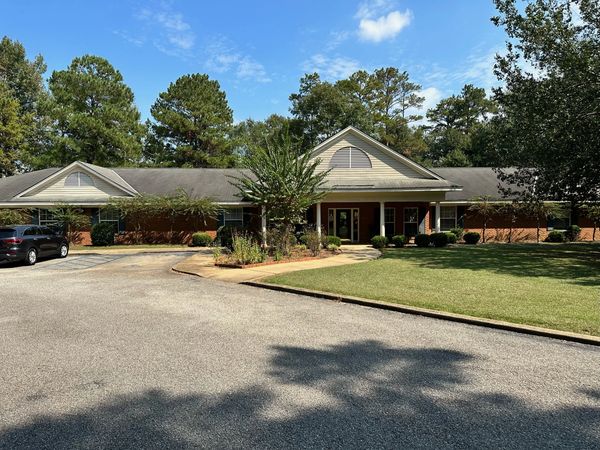
At a smaller residence, you may also notice that staff have more opportunities to know residents personally. Pine Needle Senior Living is a boutique 16-suite residence in Greenville, Alabama. Its smaller setting supports a more personal approach, with individualized care plans and a homelike environment.
That does not mean a small residence is the right fit for every person. The most important question is whether the community can safely provide the level of care your parent needs.
Cost in Alabama
Cost is a major part of the decision. Rates vary by location, room type, services, care level, and whether additional fees are added to the base rate.
Published estimates for Alabama commonly show:
- Assisted living: approximately $3,150 to $4,500 per month
- Nursing home care: approximately $6,500 to $8,800 per month
These are broad planning ranges, not guaranteed prices. Older estimates may be lower than current rates. For example, Caring.com’s Alabama nursing home guide lists historical average costs for assisted living and nursing home care, while CareScout’s Cost of Care Survey provides more recent national and state-level cost information.
When comparing costs, ask for a complete written estimate. Find out whether the price includes:
- Private or shared accommodations
- Meals and snacks
- Utilities
- Housekeeping and laundry
- Medication management
- Personal care
- Transportation
- Activities
- Medical supplies
- Higher levels of assistance
- Move-in or community fees
Some assisted living communities use an all-inclusive model. Others charge a base rate plus fees for additional services. Pine Needle Senior Living describes its pricing as all-inclusive, but you should still ask for the current rate sheet and a written explanation of what is included.
Nursing home costs are usually higher because the setting provides more intensive medical and nursing support. Medicare may cover some short-term skilled nursing services after a qualifying hospital stay, but it generally does not pay for long-term custodial care. Medicare’s skilled nursing facility guidance can help you understand the basic rules.
For questions about Medicaid eligibility and skilled nursing coverage in Alabama, visit Alabama Medicaid.
Changing Care Needs
Many families worry that choosing assisted living means they will need to move their parent again soon. Sometimes a move is necessary. Sometimes the assisted living community can provide additional support as needs change.
Ask each residence:
- Can care plans be updated when needs change?
- What types of hands-on assistance can staff provide?
- Can the community support increased help with bathing, dressing, or transfers?
- How are falls or changes in behavior handled?
- Can the community provide memory support?
- What medical services are available?
- What conditions would require a move to skilled nursing?
- Does the community coordinate with physicians and home health providers?
A move to nursing care may become necessary if your parent needs continuous skilled nursing, complex medical treatments, intensive rehabilitation, or care that the assisted living residence is not licensed or staffed to provide.
Pine Needle Senior Living works with residents, families, and physicians to create personalized care plans. The residence offers medication management, daily meals, activities, transportation, and personal care support. Families should discuss their parent’s specific needs with the Pine Needle team to confirm whether the residence is an appropriate fit.

Setting Matters
The size and feel of a community can affect your parent’s comfort.
Large skilled nursing facilities may offer extensive medical services, rehabilitation programs, and specialized departments. They may be the right choice for residents with complex medical needs.
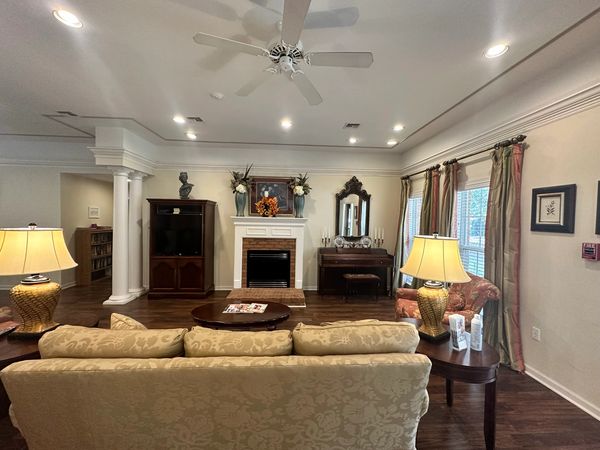
A smaller assisted living residence may feel more familiar and easier to navigate. Residents may have more opportunities for regular contact with the same caregivers and other residents. A smaller setting may also be a good match for someone who becomes overwhelmed in a large building.
During your tour, notice:
- Whether the building is clean and easy to navigate
- How residents and staff interact
- Whether residents appear engaged
- How meals are served
- Whether common areas feel comfortable
- How private rooms and bathrooms are arranged
- Whether the community feels safe and accessible
- How staff respond to your questions
A Simple Comparison
| Consideration | Assisted Living | Nursing Home |
|---|---|---|
| Main focus | Daily support and residential care | Skilled nursing and medical care |
| Best for | Medically stable adults needing help with daily activities | Adults with complex or intensive care needs |
| Nursing coverage | Varies by community | Continuous nursing coverage is generally available |
| Cost | Usually lower | Usually higher |
| Setting | Often residential and homelike | More clinical, with rehabilitation and medical services |
| Care changes | May provide additional personal care within its license | Designed for higher levels of care |
| Medicare | Usually does not cover long-term room and board | May cover some short-term skilled nursing after qualifying care |
How to Choose
Start with your parent’s needs, not with a facility’s marketing materials.
Before you visit, write down:
- What your parent can do independently
- What tasks require help
- Current medications
- Recent falls or hospital visits
- Mobility concerns
- Memory or supervision needs
- Monthly budget
- Preferred location
- Important routines, pets, hobbies, and preferences
Then tour several communities. Bring your parent when possible. Ask for a care assessment and a complete pricing explanation.
You do not have to make the decision alone. Talk with your parent’s physician, discharge planner, financial advisor, and trusted family members. A careful comparison can help you choose a setting that supports safety, independence, and quality of life.
Visit Pine Needle Senior Living
Pine Needle Senior Living provides personalized assisted living in Greenville, Alabama. Our boutique 16-suite residence offers a smaller, welcoming setting for seniors who need support with daily living while remaining as independent as possible.
Learn more about Pine Needle Senior Living, view our gallery, or contact us to schedule a visit.
You are welcome to take your time, look around, and ask questions. Call Pine Needle Senior Living at (334) 382-3757 to learn more about current availability and care options.